
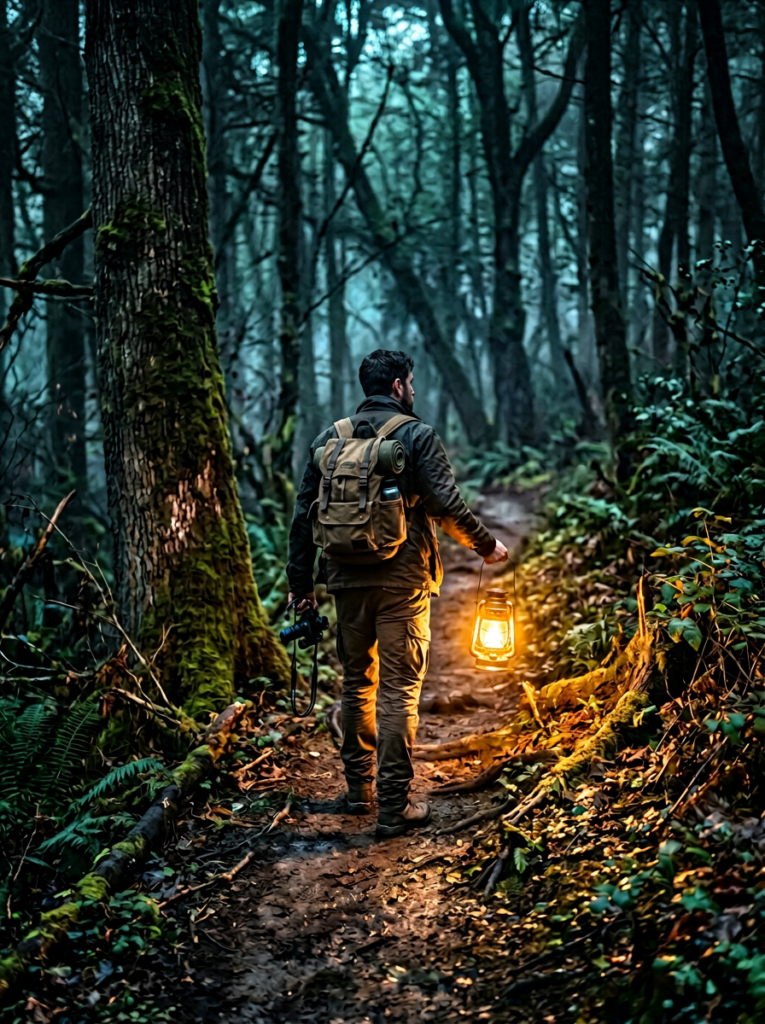
If we compare ordinary planning to a kerosene lamp lighting our way during a night-time walk through the woods, then scenarios are nothing less than night-vision goggles. Admittedly, it does not allow us to see the branches under our feet, but it does allow us to spot a potential enemy from a great distance, even when they are hiding amongst the trees. Both approaches have their pros and cons. Ad hoc observation and trend extrapolation are useful tactically, but useless in the long run. However, thanks to them, we won’t trip over a branch lying on the path. The downside of scenarios is, of course, their limited scope. But what if we carry out five or more integrated scenario studies and try in this way to broaden the spectrum of observed phenomena, whilst at the same time analysing trends? The resulting picture of the forest will never match that on a sunny day, but it will allow us to test whether we are straying from the path we have set ourselves, whilst avoiding potential pitfalls.
These 20 scenarios didn’t just appear out of thin air. They were developed through a complex, labour-intensive and unprecedented research process. Here’s a brief recap of what we’ve achieved over the last two years of work on Agenda 2040. Thank you to everyone for your collaboration, support and encouragement for this project.
What’s next? Please join us for a short presentation.