

Our projects
Projects carried out or initiated by PTC are beginning to account for an increasingly significant proportion of our work. Each of them contributes in some way to fulfilling our organisation’s mission.
We are constantly working on new concepts and ventures in research, education and strategic planning. Our track record includes a number of concepts awaiting implementation or business implementation. We are eager to build partnerships and advise on development ventures and new business models. Below we present brief characteristics of those projects that have received funding, ended successfully or are in the process of implementation.
The digcomp.pl project
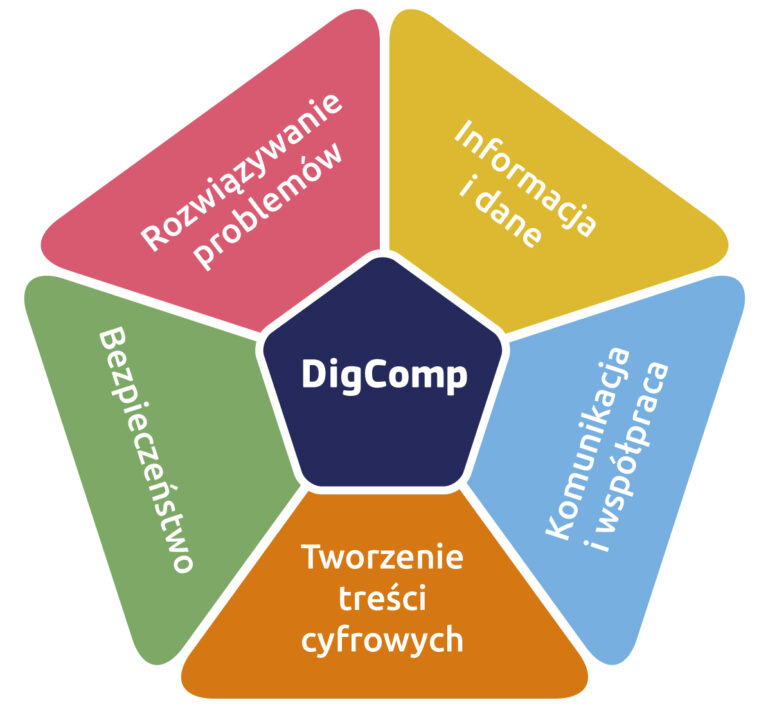
Digital skills tailored precisely to the needs of the labour market and new business models are a key mechanism enabling organisations in the new technology sector to build resilience.
In collaboration with the social partners, we have been systematically developing the area of digital skills for many years, providing appropriate research and technical support. Our work in this field has given rise to numerous spin-off initiatives, which are now emerging on the training and certification market.
Polish Digital Resilience Agenda 2040 -Model of strategic preparation for the antinomies of digitization

The role of the project is to make a set of predictive studies on the impact of automation and digitization on key areas of the state and its institutions.
The goals of the project are:
- Minimize potential risks associated with the dynamic impact of the digitization process on key areas of the functioning of the socio-economic system in Poland by 2040 by conducting in-depth research and analysis using a scenario approach;
- Developing the assumptions of the Polish Digital Resilience Agenda 2040 - in the form of a report containing the results of research on potential technological, social and economic phenomena that are the consequences of digitization and automation. The report will include proposals for strategic actions and initiatives to increase resilience to the antinomies of digitization.
System for evaluating research for its potential to create new business models
Diversifying business activities can potentially reduce the likelihood of bankruptcy, and not just because of digitalisation.

The basic idea of the project is to find a mechanism for creating new business models based, on the one hand, on the existing, often unconscious potential, and, on the other hand, based on solid reasons for business success. Every enterprise needs a "plan b", i.e. a potential alternative business model based on its potential. Reality forces us to seek new, unprecedented and alternative forms of entrepreneurial support. Inaction in this regard can result in significant, often uncontrollable, changes in the social structure, a large number of bankruptcies and increased migration, and thus the disintegration of the social fabric itself. Businesses are a pillar of this fabric, making it a matter of public policy to increase their competitiveness on the basis of their potential. An often underestimated threat is the process of mass digitization, which can lead to significant negative changes in the structure of enterprises. Implementation of the project's objective can offset the negative effects of this phenomenon.
Find out more about the project on the website ideebiznesowe.pl
Digitally active
On 1 November 2023, we launched the “Digitally Active” project, which is co-financed under Measure 10.6 – Adult Learning – Priority X “Better Education” – of the European Funds for Lublin 2021–2027 programme.
We warmly invite anyone wishing to improve their digital skills to take part in the project.


Research on a system for adapting the offer of vocational education to the needs of local labour markets using predictive methods and techniques

Another project initiated and designed by PTC. This time, it focuses on vocational education and its optimisation as a key pillar of digital resilience.
„Our task is both extremely interesting and challenging to carry out, as no one in Poland has ever approached the subject of vocational education in this way before. On the one hand, we use existing data, reports and findings from research; on the other, these are supplemented by scenarios and predictions regarding the possible directions in which changes may unfold, and the direction in which the demand for future skills will go – explained Dr Jakub Koper, Deputy Director of the Educational Research Institute. The project will run until mid-2026. By then, we will see the results of the work carried out as part of the project led by the Zamość Academy, the Educational Research Institute and the Polish Digital Society.”
https://www.kwalifikacje.akademiazamojska.edu.pl/